HEBERLING LAB

  • Welcome
  • People
  • Publications
  • Photos
  • Collected on this day!
  • Welcome
  • People
  • Publications
  • Photos
  • Collected on this day!

Collected on this day...

a weekly blog featuring specimens in the Carnegie Museum herbarium.
Each specimen has an important scientific and cultural story to tell.
This material is based upon work supported by the National Science Foundation grant no. DBI 1612079 (2017-2019) and DBI 1801022 (2019-2022). Any opinions, findings, and conclusions or recommendations expressed in this material are those of the author(s) and do not necessarily reflect the views of the National Science Foundation.
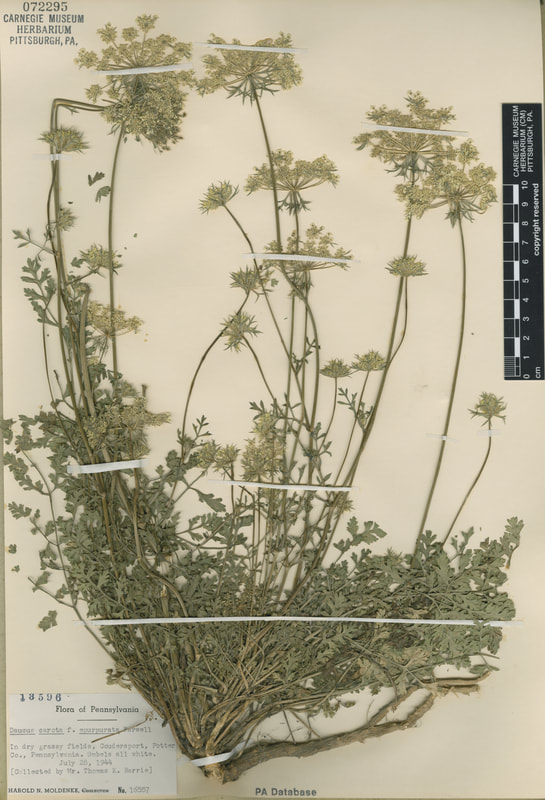
July 28, 1944: 74 years ago

7/26/2018

Comments

 
Picture
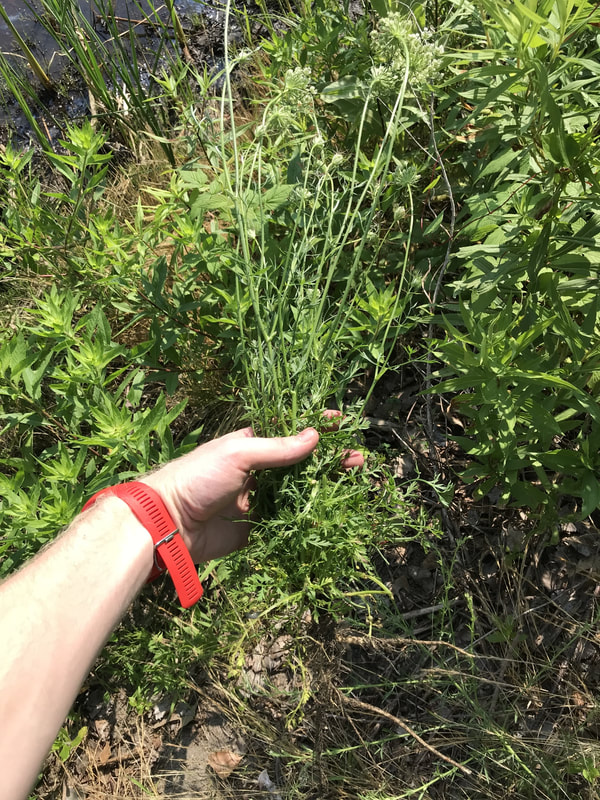
Did you know Queen Anne’s lace is closely related to the carrot in your garden?  In fact, it is also called wild carrot. This specimen of Queen Anne’s lace aka wild carrot (Daucus carota) was collected in Coudersport, Pennsylvania (Potter county) on July 28, 1944 by Thomas K. Barrie.
 
Queen Anne’s lace is a common weed throughout the temperate world.  Its blooms are a sign of summer in Pittsburgh.  Not only is it in the carrot family (Apiaceae), but in fact, domesticated carrots are a cultivar of a subspecies of Queen Anne’s lace – Daucus carota subsp. sativus. 
 
Carefully pull this species out of the ground and you’ll find a hefty, fleshy tap root that looks and smells like the carrots we all know. 

Its white umbrella like clusters of flowers (called "umbels") are characteristic of the carrot family (Apiaceae), which also includes other well know species in our area such as poison hemlock.
 
Queen Anne’s lace is native to temperate Europe/Asia and was introduced to North America.  It is now widely naturalized in fields and roadsides.
Picture
Picture
Comments

July 17, 1968: 50 years ago

7/17/2018

Comments

 
Picture
Herbarium specimens can provide insight into plant-insect interactions.  For instance, many specimens show obvious signs of insect damage to the leaves or flowers.  Many other specimens, upon closer inspection under magnification, show damage that is much subtler.  Sometimes, even the larvae or insects were also pressed with the plant!  Some of this damage may have happened from pests in the herbarium that occurred over decades of storage.  Damage from herbarium pests is a serious concern and collection managers are also conservators of these archives, keeping a vigilant eye out for damage from the elements (such as light, temperature, humidity, water, and other chemicals) and introduced pests (such as mold and insects).  However, damage that occurs in the herbarium is minimized for long term preservation and luckily, insect damage that occurs in the herbarium is often easily distinguished from herbivory that happened in the wild, before the plant was collected, dried, pressed, and added to the collection.
 
Few studies to date have used the herbarium record to understand the ecology and evolution of plant-insect interactions. However, there are several pioneering studies at the frontier of this novel use of these collections.
 
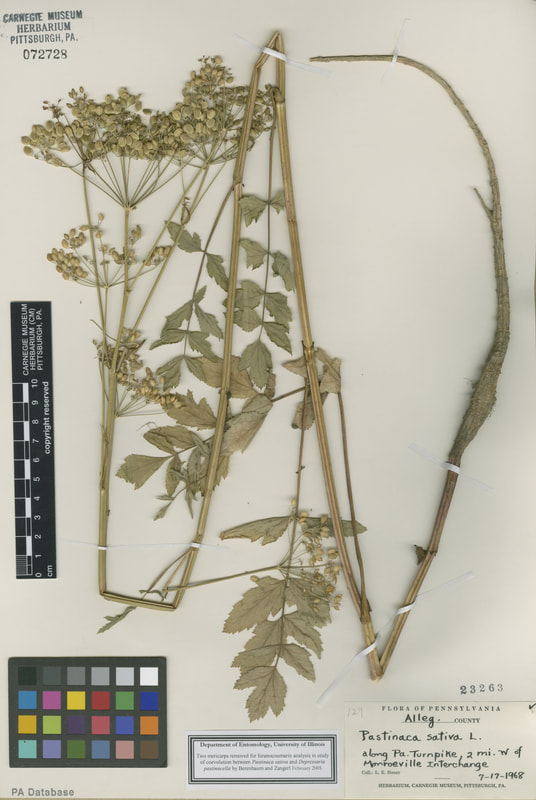
This specimen pictured above of wild parsnip (Pastinaca sativa) was collected by Leroy Henry on July 17, 1968 along the Pennsylvania Turnpike not far from Pittsburgh.  Leroy Henry was an influential Curator of Botany at the Carnegie Museum from 1937-1973, having collected thousands of specimens in the herbarium.
 
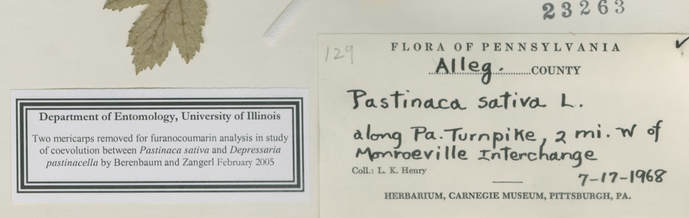
In addition to the “standard” herbarium label that gives information on what the specimen was first identified as, where it was collected, who collected it, etc., check out another typed label affixed to this sheet.  This annotation label indicates two seeds were removed from for chemical analysis in 2005.  Annotation labels are commonly added to specimens years to centuries later to note its use in a study, a new identification, and/or part of the specimen was removed.
 
Picture
​
This specimen was one of many specimens included in a study on wild parsnip by Zangerl and Berenbaum published in 2005 in the high-profile journal Proceedings of the National Academy of Sciences (PNAS).  
 
Wild parsnip (Pastinaca sativa) was introduced to the United States from Europe centuries ago and has since spread to become invasive.  The species is a member of the carrot family (Apiaceae).  Like many other species in this plant family, wild parsnip produce phototoxic chemicals called furanocoumarins, which protect the plant from insect herbivory.  These compounds also cause major skin irritations in humans, reacting with sunlight to cause nasty rashes.  This group of chemicals is of the same fame of giant hogweed, poison hemlock, and other well-known toxic plants in the United States.
 
Zangerl and Berenbaum (2005) analyzed herbarium specimens collected over the past 150+ years.  These specimens were collected from before wild parsnip was widespread in the US and compared those to specimens collected more recently, after the species was widely established.  A major herbivore, the parsnip webworm (Depressaria pastinacella) was also accidentally introduced in the mid-late 1800s.  The authors found that as rates of webworm attack increased, so did the toxicity of wild parsnip.  Specimens from 1850-1889 (early stages of introduction) had lower levels of the toxic furanocoumarins than plants collected more recently, as well as than specimens collected in their native range (Europe), where the parsnip webworm is also native.
 
There is so much known and unrealized potential in herbarium specimens.  This particular specimen was not collected with the intention of studying the ecology and evolution of plant-insect interactions.   This study helped inform our current and future use of biological control agents to manage introduced species.
 
These unanticipated uses (often decades to over a century after a specimen was collected!) illustrate the incredible power of natural history collections.
 
See an excellent paper by Meineke et al. just published on this topic (including quantifying the effects of climate change on plant herbivory through herbarium specimens): https://esajournals.onlinelibrary.wiley.com/doi/full/10.1002/ecm.1307.
 
Check out the cool parsnip webworm study here: http://www.pnas.org/content/102/43/15529
Picture
Picture
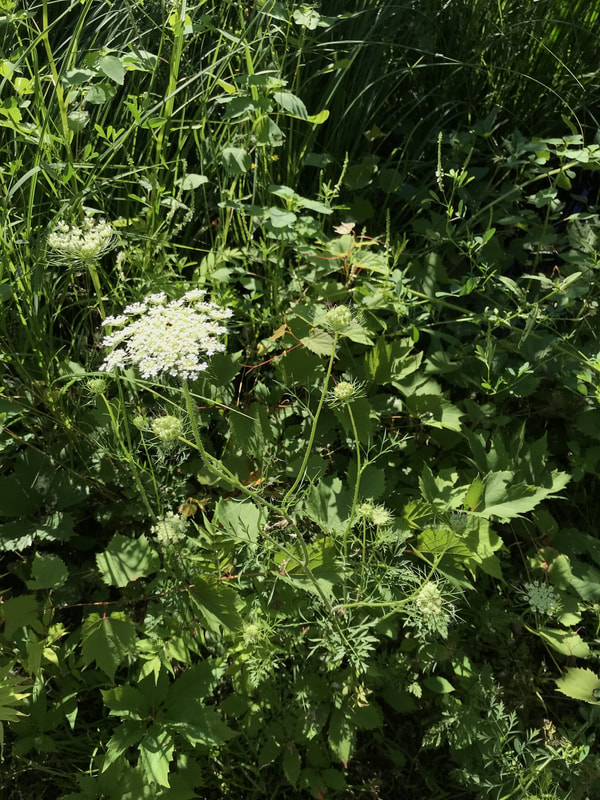
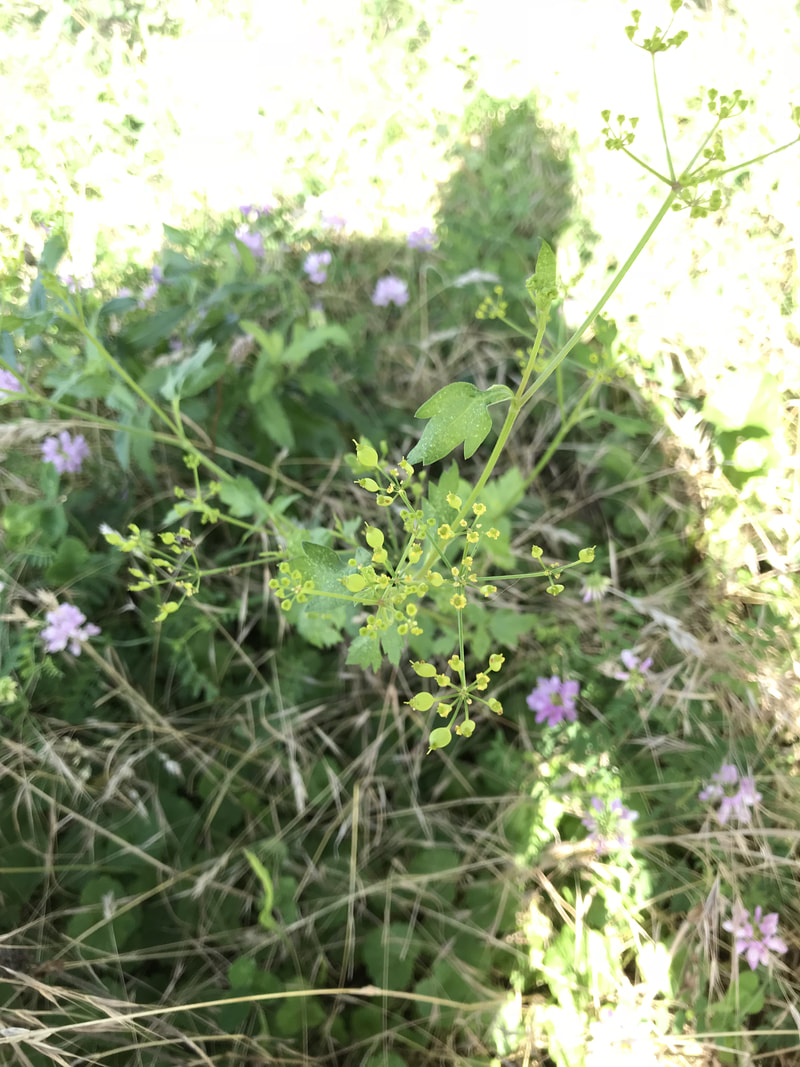
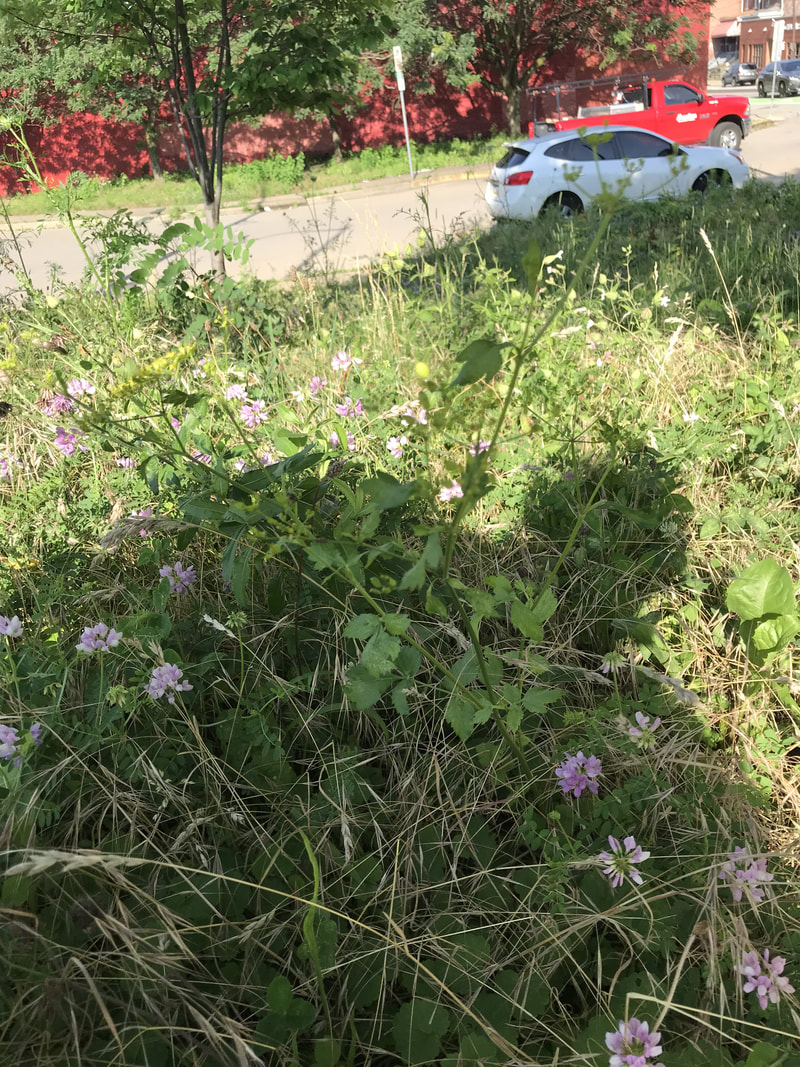
Wild parsnip (Pastinaca sativa) in an unmowed roadside median next to Bloomfield Bridge, Pittsburgh PA on June 29, 2018.
Comments

July 14, 1990: 28 years ago

7/14/2018

Comments

 
Picture
​​“This is, perhaps, the most execrable weed that has yet invaded the farms of our country.” 
William Darlington (1859) American Weeds and Useful plants, 2nd ed. 
 
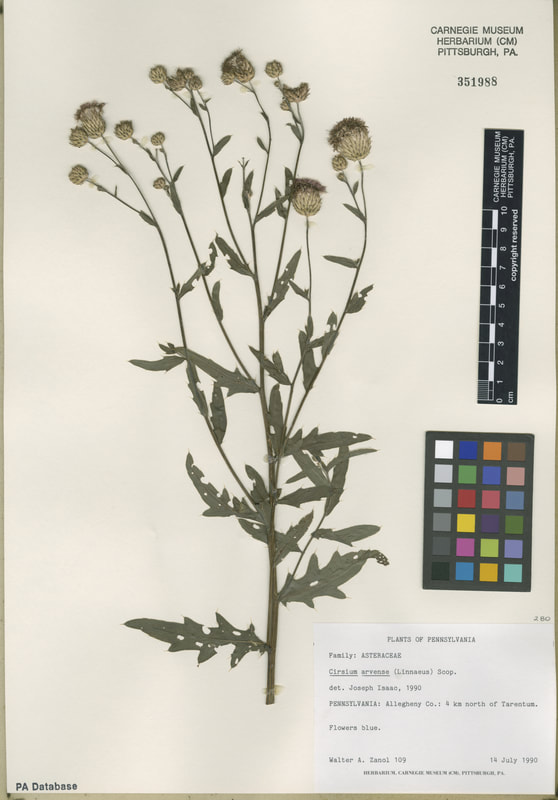
This “execrable weed” described in the quote above by Darlington over 150 years ago was Canada thistle, Cirsium arvense (sunflower family; Asteraceae).
 
This particular specimen of Canada thistle was collected by Walter Zanol on July 14, 1990 near Tarentum, Pennsylvania (Allegheny county). 
 
Canada thistle is a common weed in agricultural fields, disturbed areas, and roadsides in Pennsylvania and across the world.  Although the common name suggests it is from Canada, this is misleading, as the species is from southeastern Europe and eastern Mediterranean.
 
It was among the earliest introduced plant species in North America by European colonists, with records suggesting as early as the 1600s.  It was probably introduced accidentally as a contaminant in crop seed.  It has since spread and become invasive in many US states and Canadian provinces. It remains a major agricultural pest today.
 
By 1851, it was already regarded a “most troublesome [sic] weed, which is extremely difficult to eradicate” in Pennsylvania (Knoll, 1851).
 
It is a weed of many major crops, causing economic harm through reduction of crop yields.  It spreads both sexually (through seeds) and asexually (through underground rhizomes).  It is not uncommon to see many individuals of this species forming dense patches in fields or along the road.  These patches are likely connected belowground (or once were connected).  Because of this attribute of spreading via creeping lateral roots, it is also known as “creeping thistle.”
 
Its purple flowers and spiny stems/leaves are similar at first glance to many thistles, but its horizontal, creeping lateral roots make this species easily distinguishable from the many other non-native and native thistles in Pennsylvania.
 
Keep an eye out for this species.  It can be spotted throughout Pennsylvania this time of year, often forming dense stands that are going to seed.  Their seeds go airborne, looking almost like snow or cotton flying through the air.

 
Comments

Happy 4th of July!

7/3/2018

Comments

 
Picture
Picture
Did you know that one of the earliest Presidents of the United States lived in southwestern PA?  The American soldier and politician Arthur St. Clair, who lived in the Ligonier Valley near Latrobe, Pennsylvania, was President two years before George Washington was! Well, sort of.  The US Constitution wasn’t drafted until the 1787, over ten years after Independence Day 1776.  Before that, under the Articles of Confederation, there was a Confederation Congress.  Arthur St. Clair was elected President of the Continental Congress in 1787. 
 
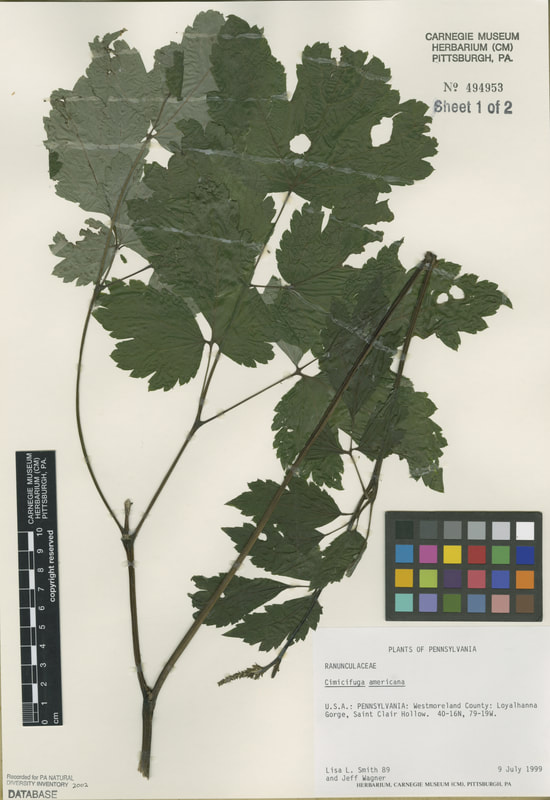
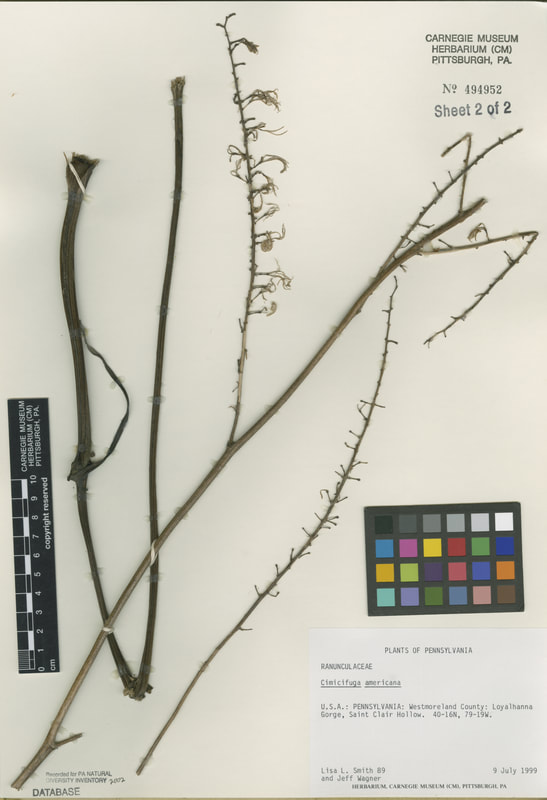
These patriotic specimens of American Bugbane (Actaea podocarpa, formerly Cimicifuga americana) were collected on July 9, 1999 in the Loyalhanna Gorge (Rt. 30 aka the Lincoln Highway runs through it between Greensburg and Ligonier, PA), near where Arthur St. Clair owned property and lived the later years of his life (now known as Saint Clair Hollow).  In the buttercup family (Ranunculaceae), American bugbane, also called mountain bugbane, is a forest understory herb similar in appearance to the more common black cohosh (Actaea racemosa).  The species is currently listed as threatened in Pennsylvania.
 
Arthur St. Clair was born in Scotland in 1737 and fought with British troops in the American colonies during the French and Indian War.  After the war, he settled in Ligonier Valley and was the largest landowner in Westmoreland County at the time.  He was later a American colonel in the Revolutionary War.  After America gained its independence, he was elected a delegate to the new Confederation Congress (governing body under the Articles of Confederation that pre-dates the Constitution).  He served a one-year term as President of the Continental Congress in 1787, during which time the Northwest Territory was created.  He later became governor of the Northwest Territory (large area which are now Midwest states).  After retiring, he returned to live out his days in the Loyalhanna Gorge (between present day Ligonier and Greensburg, not far from Idlewild Park).  He died in poverty in 1818.
 
Many towns in Pennsylvania and the Midwest are named after Arthur St. Clair, including Upper St. Clair near Pittsburgh.
 
A lot of history in Western Pennsylvania!
 
Happy 4th of July! 
Comments

    RSS Feed

      Suggest a specimen!

      Your birthday, favorite species, collected by your house, a particular collector, etc...?
      [object Object]
    Submit

    Archives

    September 2025
    January 2025
    October 2024
    January 2024
    September 2023
    May 2023
    October 2022
    April 2022
    January 2022
    December 2021
    November 2021
    October 2021
    August 2021
    July 2021
    June 2021
    May 2021
    March 2021
    February 2021
    January 2021
    December 2020
    November 2020
    October 2020
    September 2020
    July 2020
    June 2020
    May 2020
    April 2020
    March 2020
    February 2020
    January 2020
    December 2019
    November 2019
    October 2019
    September 2019
    August 2019
    July 2019
    June 2019
    May 2019
    March 2019
    February 2019
    January 2019
    December 2018
    November 2018
    October 2018
    September 2018
    August 2018
    July 2018
    June 2018
    May 2018
    April 2018
    March 2018
    February 2018
    January 2018
    December 2017
    November 2017
    October 2017
    September 2017
    August 2017
    July 2017
    June 2017
    May 2017
    April 2017
    March 2017
    February 2017
    January 2017

    Categories

    All
    Amaryllidaceae
    Anacardiaceae
    Apiaceae
    Apocynaceae
    Aquifoliaceae
    Araceae
    Araliaceae
    Asparagaceae
    Asteraceae
    Balsaminaceae
    Betulaceae
    Boraginaceae
    Brassicaceae
    Cactaceae
    Caprifoliaceae
    Caricaceae
    Caryophyllaceae
    Celastraceae
    Climate Change
    Convolvulaceae
    Cornaceae
    Cucurbitaceae
    Cultivated
    Cupressaceae
    Dioscoreaceae
    Dryopteridaceae
    Ericaceae
    Euphorbiaceae
    Fabaceae
    Fagaceae
    Geraniaceae
    Hamamelidaceae
    Holiday Posts
    Introduced Species
    Lamiaceae
    Lauraceae
    Life History Series
    Liliaceae
    Limnanthaceae
    Lycopodiaceae
    Magnoliaceae
    Malvaceae
    Melanthiaceae
    Melastomataceae
    Montiaceae
    Myristicaceae
    Oleaceae
    Onagraceae
    Orobanchaceae
    Oxalidaceae
    Papaveraceae
    Paulowniaceae
    Pinaceae
    Plantaginaceae
    Plants Of The Anthropocene
    Poaceae
    Poisonous
    Polemoniaceae
    Polygonaceae
    Primulaceae
    Pteridaceae
    Ranunculaceae
    Recollected
    Recollection
    Rhamnaceae
    Rosaceae
    Rubiaceae
    Salicaceae
    Santalaceae
    Sapindaceae
    Scrophulariaceae
    Simaroubaceae
    Solanaceae
    Staphyleaceae
    Type Specimens
    Ulmaceae
    Undetermined
    Urban Plants
    Violaceae
    Vitaceae